
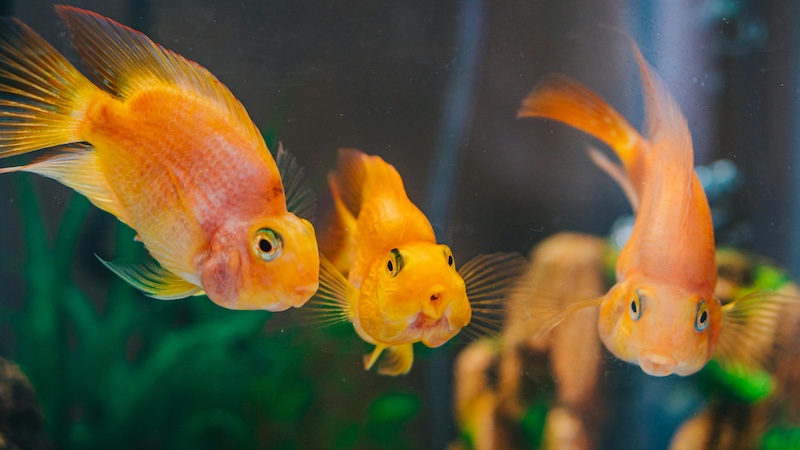
If you’ve ever stood in front of your aquarium and talked to your fish, you’re not alone. A lot of pet owners wonder if their fish can hear them or recognize their voice. The answer is more interesting than a simple yes or no. Fish don’t hear in the same way humans do, but they are far more aware of sound and vibration than most people realize.
How Fish Hear Sound
Fish don’t have external ears like we do, but that doesn’t mean they’re deaf. They rely on two main systems to detect sound:
Inner ears
Fish have inner ear structures that can pick up sound waves traveling through water. Since sound moves faster and more efficiently in water than in air, fish are actually very sensitive to it.
Lateral line system
This is a specialized sensory organ that runs along the sides of a fish’s body. It detects vibrations and movement in the water, helping fish sense nearby activity, predators, and even subtle changes in their environment.
Together, these systems allow fish to “hear” in a way that’s different from us but still highly effective.
Can Fish Hear You Talking?
Technically, yes, fish can detect the sound of your voice—but not in the way you might think.
When you speak outside the tank, your voice travels through air before reaching the water. Some of those sound waves transfer into the tank, but much of the detail is lost or distorted at the surface. What fish are more likely picking up is:
- Vibrations from your voice
- Changes in pressure near the tank
- Movements around them
So while your fish isn’t listening to your words or recognizing your voice like a dog would, it may still notice that you’re there and making noise.
Do Fish Recognize Their Owners?
This is where things get interesting. While fish don’t recognize voices the way mammals do, many species can recognize patterns, shapes, and routines.
For example, fish may:
- Swim to the front of the tank when you approach
- Become more active during feeding times
- React differently to familiar vs. unfamiliar people
This behavior is usually tied to visual cues and routine, not sound alone. Your fish may associate you with food rather than your voice specifically.
Sounds Fish Are Most Sensitive To
Fish are much better at detecting certain types of sounds than others. They tend to respond most strongly to:
- Low-frequency vibrations
- Sudden noises (like tapping on the glass)
- Movement near or around the tank
Loud or abrupt sounds can actually stress fish out, which is why tapping on the aquarium is strongly discouraged.
Can Talking to Your Fish Be Beneficial?
Talking to your fish won’t hurt them, as long as you’re not creating loud or sudden noises. In fact, there can be indirect benefits:
- Helps establish a consistent routine
- Encourages you to spend more time observing your fish
- May help fish become accustomed to your presence
That said, fish are not social listeners in the same way cats or dogs are. They won’t respond emotionally to your voice, but they can still become comfortable with your presence over time.
What Fish Care More About Than Your Voice
If you want to improve your fish’s quality of life, focus on the things that matter most to them:
- Clean, well-maintained water
- Proper tank size and setup
- Compatible tank mates
- Consistent feeding schedule
Sound is just a small part of their sensory world. Stability and environment are far more important.
The Bottom Line
Fish can detect sound and vibration, including noises you make near the tank. However, they don’t “hear” or understand your voice the way mammals do. Instead, they rely more on vibrations, movement, and visual cues to interpret their surroundings.
So go ahead and talk to your fish if you enjoy it. Just don’t expect a conversation back.
