
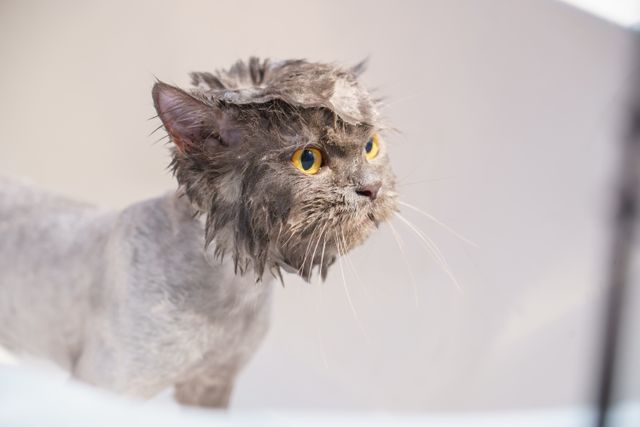
If your indoor cat spends hours licking, cleaning, and carefully maintaining their coat, you may wonder whether you need to give them a bath at all.
For most healthy indoor cats, the answer is: not very often, and sometimes not at all.
Cats are excellent self-groomers. Most healthy adult cats can keep their skin and coat clean without routine bathing. In fact, bathing a cat too frequently can dry out their skin and make grooming more stressful than it needs to be.
There are exceptions, however. Age, coat type, weight, health conditions, and the occasional household mess can all affect how often an indoor cat needs a bath.
How Often Should You Bathe an Indoor Cat?
Most healthy indoor cats do not need to be bathed on a regular schedule. Instead, they should generally be bathed only when there is a specific reason to do so.
Veterinary guidance supports this approach. VCA Animal Hospitals notes that most healthy adult cats are careful groomers and rarely require baths. How often bathing is necessary depends on factors such as the cat’s age, lifestyle, and overall health.
If you do choose to bathe a healthy cat periodically, avoid making it too frequent. Veterinarian-reviewed guidance from PetMD recommends not bathing cats more frequently than about once every four to six weeks unless your veterinarian recommends otherwise.
That does not mean every indoor cat needs a bath every four to six weeks. For many cats, months or even years can pass without a full bath being necessary.
Do Indoor Cats Need Baths?
Usually, no. Cats naturally spend a considerable amount of time grooming themselves. Cornell University’s College of Veterinary Medicine reports that cats may spend between 30% and 50% of their day grooming.
Their grooming routine helps remove loose hair and debris while maintaining their coat. Because an indoor cat is also less likely to encounter mud, dirt, and other outdoor messes, there may be very little for a bath to accomplish.
The ASPCA similarly notes that most cats stay relatively clean and rarely need baths. Regular brushing is generally more important for routine coat maintenance.
Think of bathing as something you do when your cat needs it, rather than something that automatically needs to happen every month.
When Should You Bathe an Indoor Cat?
Even a cat that never goes outside can occasionally need a bath.
A bath may be appropriate if your cat:
- Gets something dirty or sticky in their fur
- Has urine or feces on their coat
- Develops a greasy or unusually dirty coat
- Cannot adequately groom certain parts of their body
- Has a medical condition for which a veterinarian recommends bathing
- Comes into contact with a substance that needs to be removed from the coat
The reason for the bath matters more than the amount of time that has passed since the last one.
If your normally clean cat suddenly develops greasy, dirty, matted, or unpleasant-smelling fur, don’t simply increase the number of baths. A noticeable change in grooming habits or coat condition can sometimes be associated with an underlying health problem.
Do Long-haired Indoor Cats Need More Baths?
Not necessarily. It is easy to assume that a long-haired cat needs regular baths because there is more fur to maintain. In reality, brushing is usually more important than bathing for keeping a long coat in good condition.
Long-haired, silky, or curly-coated cats may need daily brushing to prevent tangles and mats. Short-haired cats typically need less frequent brushing. Regular brushing also removes loose hair, dirt, and dead skin cells while helping distribute the skin’s natural oils throughout the coat.
Bathing won’t replace brushing. In fact, bathing a cat with existing tangles can make them more difficult to remove.
Check long-haired cats regularly for tangles and mats, particularly around the armpits, belly, legs, ears, and other areas where fur tends to rub together.
Do Senior Cats Need to Be Bathed More Often?
Cats can become less effective at grooming themselves as they get older. Arthritis, reduced flexibility, weight changes, and other health problems can make it difficult for a senior cat to reach parts of their body.
You may notice greasy fur, dandruff, mats, or an unpleasant smell developing in areas your cat can no longer groom effectively.
An occasional bath may help in these situations, but brushing and targeted cleaning may be enough if only a small area needs attention.
A significant change in grooming habits is also worth mentioning to your veterinarian. Rather than assuming your cat has simply stopped caring about grooming, it’s important to determine whether discomfort or another health issue is making grooming difficult.
Do Overweight Cats Need Baths?
An overweight cat may have trouble reaching certain areas of the body, particularly the back and hindquarters.
This can result in greasy fur, dandruff, matting, or waste becoming trapped in the fur. VCA specifically identifies overweight cats as one group that may need occasional bathing because they can have difficulty grooming themselves.
Cornell also notes an association between obesity and non-allergic skin conditions in cats, potentially because overweight cats cannot reach all areas of their bodies to groom properly.
Bathing can address the immediate cleanliness issue, but frequent difficulty grooming should also be discussed with your veterinarian.
What If Your Cat Has a Skin Condition?
This is one situation where the usual bathing advice may not apply. Cats with allergies, infections, parasites, or other skin problems may be prescribed a medicated shampoo. Depending on the condition, baths may need to happen much more frequently than they would for a healthy cat.
For some skin conditions, medicated baths may be recommended weekly, although the schedule varies depending on the condition and treatment.
Follow your veterinarian’s instructions rather than a general cat-bathing schedule when using a medicated product. The shampoo may also need to remain on your cat’s coat for a specific amount of time before being rinsed.
Can You Bathe a Cat Too Often?
Yes.
Frequent bathing can remove natural oils and dry out your cat’s skin and coat. It can also create unnecessary stress, particularly for cats that strongly dislike water.
There is usually no benefit to repeatedly bathing a healthy indoor cat simply because a certain number of weeks have passed.
If you find yourself needing to bathe your cat frequently because their coat continually becomes greasy, dirty, smelly, or difficult to maintain, talk with your veterinarian. VCA recommends discussing frequent bathing with a veterinarian, who may suggest alternatives or investigate why repeated baths are necessary.
What Kind of Shampoo Should You Use On a Cat?
Use a shampoo specifically formulated for cats. Do not use human shampoo or baby shampoo on your cat. Human skin and cat skin are different, and products made for people can be too harsh for a cat’s skin. VCA recommends using shampoo formulated specifically for cats and notes that even baby shampoo should not be used.
If your cat has sensitive skin, allergies, dandruff, or another skin problem, ask your veterinarian which product is appropriate.
Never assume that a product is safe simply because it is labeled “natural.” Cats groom themselves by licking their fur, making it especially important to use products intended for feline use.
How to Bathe an Indoor Cat Safely
Preparation can make the experience easier for both you and your cat.
Before bringing your cat into the bathroom, gather everything you’ll need so you don’t have to leave them unattended. A cat-safe shampoo, several towels, a cup or gentle rinsing method, and a nonslip surface are usually sufficient.
Use comfortably warm water rather than hot water. A nonslip mat can give your cat better footing and may make them feel more secure.
Wet the coat carefully while avoiding the eyes, ears, and nose. Apply the cat shampoo according to its directions, then rinse thoroughly. Shampoo residue left in the coat can irritate the skin.
For your cat’s face, a damp washcloth is generally a better option than pouring or spraying water over their head.
Once the bath is finished, gently towel-dry your cat and keep them somewhere comfortably warm until they are dry.
If your cat becomes extremely frightened, aggressive, or difficult to safely control, don’t force the bath. A veterinarian or professional cat groomer may be a safer option.
What Can You Do Instead of Bathing Your Cat?
Routine grooming can prevent many of the situations that make baths necessary.
Brush your cat regularly. Brushing removes loose fur and debris, helps prevent mats, and distributes natural oils throughout the coat. Cornell also notes that removing loose fur through brushing can reduce how much hair cats swallow while grooming themselves.
Spot-clean small messes. If only one small area of your cat’s coat is dirty, you may not need to put them through a complete bath.
Check the coat regularly. Look for mats, excessive dandruff, bald areas, redness, bumps, parasites, or other changes while brushing your cat.
Pay attention to grooming habits. A cat that suddenly stops grooming or begins grooming excessively may need veterinary attention.
Regular grooming gives you an opportunity to notice changes that might otherwise be hidden beneath your cat’s fur.
When Should You Call Your Veterinarian?
Bathing should solve a cleanliness problem. It shouldn’t be used to repeatedly cover up a skin or coat problem.
Contact your veterinarian if you notice:
- A sudden decline in grooming
- Persistent greasy or dirty fur
- A strong or unusual odor
- Bald patches
- Red, irritated, flaky, or crusty skin
- Frequent scratching or licking
- Significant dandruff
- Recurring mats despite regular brushing
- Difficulty reaching certain parts of the body
- A sudden increase in grooming
Excessive grooming deserves attention, too. Cornell notes that obsessive grooming can be associated with a problem, particularly when it results in hair loss or skin lesions.
Changes in grooming can provide useful clues about your cat’s health.
Frequently Asked Questions About Bathing Indoor Cats
How often should you bathe an indoor cat?
Most healthy indoor cats do not need baths on a fixed schedule. They can generally be bathed only when they become dirty or have another specific reason for needing one. If you choose to bathe your cat periodically, avoid bathing more frequently than every four to six weeks unless your veterinarian recommends otherwise.
Is it okay to never bathe an indoor cat?
Yes. Some healthy indoor cats may go their entire lives without needing a traditional bath. Cats are effective self-groomers, and regular brushing may provide all the routine coat maintenance they need.
How often should you bathe a long-haired indoor cat?
Long-haired cats do not necessarily need more frequent baths. They do, however, generally require more frequent brushing. Some long-haired cats benefit from daily brushing to prevent tangles and mats.
Should you bathe a cat once a month?
A monthly bath is usually unnecessary for a healthy indoor cat that keeps itself clean. Bathing should be based on the individual cat’s needs rather than automatically following a monthly schedule.
Can I bathe my cat every week?
A healthy cat generally should not need weekly baths. Weekly bathing may sometimes be prescribed for cats receiving treatment for certain skin conditions, but that schedule should be followed under veterinary guidance.
Why does my indoor cat smell bad?
Persistent odor can come from dirty fur, problems with self-grooming, dental issues, skin conditions, anal gland problems, urine or feces on the coat, or other health concerns. If the odor returns after cleaning or you cannot determine its source, contact your veterinarian.
Do cats feel better after a bath?
A cat that was genuinely dirty or uncomfortable may feel better once its coat is clean and dry. However, many cats find bathing stressful, so there is no need to bathe a clean, healthy cat simply for the experience.
Here’s the Deal
Most healthy indoor cats rarely need to be bathed. Cats do much of their own coat maintenance, and regular brushing is generally more useful than putting them on a bathing schedule.
Give your cat a bath when there is a reason for one, such as a dirty coat, something stuck in the fur, difficulty self-grooming, or a veterinarian-recommended skin treatment. Otherwise, letting your cat handle most of the cleaning is perfectly fine.
And if your cat suddenly can’t seem to keep their coat clean, don’t assume they simply need more baths. Changes in grooming habits can be a sign that something else is going on, making a conversation with your veterinarian a better next step.
