
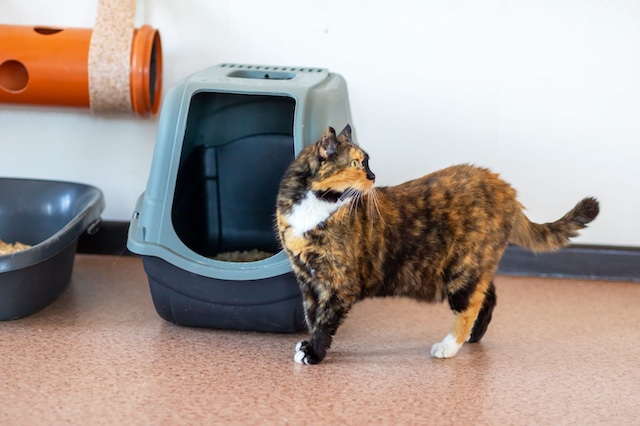
If your cat has always used the litter box without problems but has suddenly started urinating on the floor, furniture, or your bed, you’re probably wondering what changed.
In many cases, this behavior is your cat’s way of telling you that something is wrong. Medical conditions, stress, changes in the home, or even a dirty litter box can all cause a cat to stop using the litter box consistently.
The good news is that most cases can be resolved once you identify the underlying cause. Here’s what you need to know.
Rule Out a Medical Problem First
A sudden change in litter box habits should always be taken seriously. Cats are experts at hiding illness, and inappropriate urination is often one of the first signs that something isn’t right.
Common medical causes include:
- Urinary tract infections (UTIs)
- Bladder inflammation (feline idiopathic cystitis)
- Bladder stones or crystals
- Kidney disease
- Diabetes
- Arthritis that makes climbing into the litter box painful
- Cognitive decline in senior cats
If your cat is straining to urinate, producing only a few drops of urine, crying while using the litter box, or not producing urine at all, seek veterinary care immediately. Male cats, in particular, can develop life-threatening urinary blockages that require emergency treatment.
Even if your cat seems otherwise healthy, it’s worth scheduling a veterinary visit before assuming the problem is behavioral.
Stress Can Trigger Inappropriate Urination
Cats thrive on routine. Even small disruptions can cause anxiety that leads to accidents outside the litter box.
Common stressors include:
- Moving to a new home
- Rearranging furniture
- Bringing home a new pet
- A new baby or family member
- Guests staying in the house
- Construction or loud noises
- Changes in your work schedule
- Conflict with another cat
Some cats respond to stress by spraying, while others simply choose a different place to urinate.
If the accidents started shortly after a major life change, stress may be playing a significant role.
Your Litter Box May Be The Problem
Sometimes the issue isn’t your cat. It’s the litter box itself.
Ask yourself:
- Is the box cleaned every day?
- Has the litter brand changed recently?
- Is the box difficult to access?
- Is it located in a noisy or busy area?
- Is the box large enough for your cat?
- Is there enough litter inside?
Many cats prefer unscented litter with a soft texture. Strong fragrances that appeal to humans can be unpleasant for cats.
A general guideline is to have one litter box per cat, plus one extra. In a two-cat household, for example, three litter boxes are ideal.
Older Cats May Struggle with Mobility
Senior cats often develop arthritis, making it uncomfortable to step over high litter box sides.
If your older cat suddenly starts having accidents, consider whether they may be experiencing joint pain.
Switching to a litter box with lower sides or placing additional boxes on different levels of your home can make a significant difference.
Territorial Behavior Bay Be to Blame
If you have multiple cats, territorial disputes can sometimes lead to inappropriate urination.
One cat may:
- Guard the litter box
- Block another cat’s access
- Intimidate another cat after they leave the box
Even if you’ve never witnessed aggressive behavior, subtle bullying can happen when you’re not watching.
Providing multiple litter boxes in different locations often reduces competition and gives each cat a safe place to eliminate.
Your Cat May Be Marking Territory
Not every accident is actually an accident.
Cats sometimes spray urine to mark territory. Spraying usually occurs on vertical surfaces such as walls, furniture, or doors and involves a smaller amount of urine than normal urination.
Territorial marking is more common when:
- Outdoor cats are visible through windows
- A new pet enters the home
- Another cat has recently visited the house
- Household routines change
Spaying or neutering can reduce spraying in many cats, although some continue the behavior afterward.
Never Punish Your Cat
It can be frustrating to find urine on your carpet or bed, but punishment rarely solves the problem.
Cats don’t associate punishment with something they did hours earlier. Instead, they may become fearful of you or the litter box itself, making the problem worse.
Focus on identifying the cause rather than correcting the behavior.
Clean Accidents Thoroughly
Cats have an incredible sense of smell. If they can still detect urine in an area, they’re more likely to use that spot again.
Use an enzymatic cleaner designed specifically for pet urine. These products break down the odor-causing compounds rather than simply masking the smell.
Avoid cleaners containing ammonia, which can smell similar to urine and encourage repeat accidents.
How to Help Your Cat Use the Litter Box Again
Once medical issues have been ruled out, these steps often help:
- Scoop litter boxes at least once daily.
- Wash litter boxes regularly with mild soap and water.
- Provide one litter box per cat, plus one extra.
- Place litter boxes in quiet, accessible locations.
- Avoid making frequent changes to litter type.
- Reduce household stress where possible.
- Give each cat their own food, water, and resting areas.
- Use positive reinforcement when your cat uses the litter box successfully.
Patience is important. Depending on the cause, it may take several weeks for your cat to return to consistent litter box habits.
When Should You Call Your Veterinarian?
Contact your veterinarian if your cat:
- Suddenly begins urinating outside the litter box
- Strains while trying to urinate
- Cries during urination
- Has blood in the urine
- Drinks significantly more water than usual
- Produces very little urine
- Continues having accidents despite changes at home
Early diagnosis can make treatment easier and help prevent more serious health problems.
Frequently Asked Questions
Why would a cat suddenly stop using the litter box?
The most common causes include urinary tract problems, stress, dirty litter boxes, changes in the home, arthritis, territorial behavior, or problems with the litter box setup.
Why is my cat peeing on my bed?
Cats may urinate on beds because they feel stressed, anxious, or ill. Beds also carry your scent, which can make them comforting locations during periods of stress.
Can stress alone cause a cat to pee outside the litter box?
Yes. Stress is one of the most common behavioral causes of inappropriate urination. However, medical conditions should always be ruled out first.
Should I change my cat’s litter?
If your cat has been using the same litter successfully, changing it may make the problem worse. If you do switch litters, transition gradually by mixing the new litter with the old over several days.
Get Your Cat Back on Track
A cat that suddenly starts peeing outside the litter box isn’t being spiteful or stubborn. In most cases, they’re responding to a health issue, stress, discomfort, or a problem with their environment.
The sooner you identify the cause, the sooner you can help your cat feel comfortable again. Start with a veterinary examination, evaluate your litter box setup, and consider any recent changes in your household. Addressing the underlying issue gives your cat the best chance of returning to healthy litter box habits.
If you found this guide helpful, explore our other cat care articles for more expert tips on keeping your feline healthy and happy.
